Excellent Practices
Cancer Clinical Trials
Practice Category: Research
Centre: Trinity St. James’s Cancer Institute
Ingrid Kiernan
ikiernan@stjames.ie
Challenge addressed by the practice
We encountered several challenges on the journey to achieving Comprehensive Cancer Centre status. The two principal challenges were: (a) increasing the number of actively recruiting clinical trials and (b) increasing patient enrolment into interventional cancer studies to meet OECI standards. In parallel, it was essential to fully embed clinical trials within routine clinical services. Although we had an experienced team of research nurses and trial coordinators, it quickly became apparent that additional staffing and new roles within the unit would be required to support this expansion. Modern oncology trials are increasingly complex, involving stringent eligibility criteria, biomarker testing, advanced imaging, and intensive safety monitoring. As a result, it was crucial to carefully select trials that were both scientifically relevant and operationally feasible, while maximising access for our patient population.
Solution
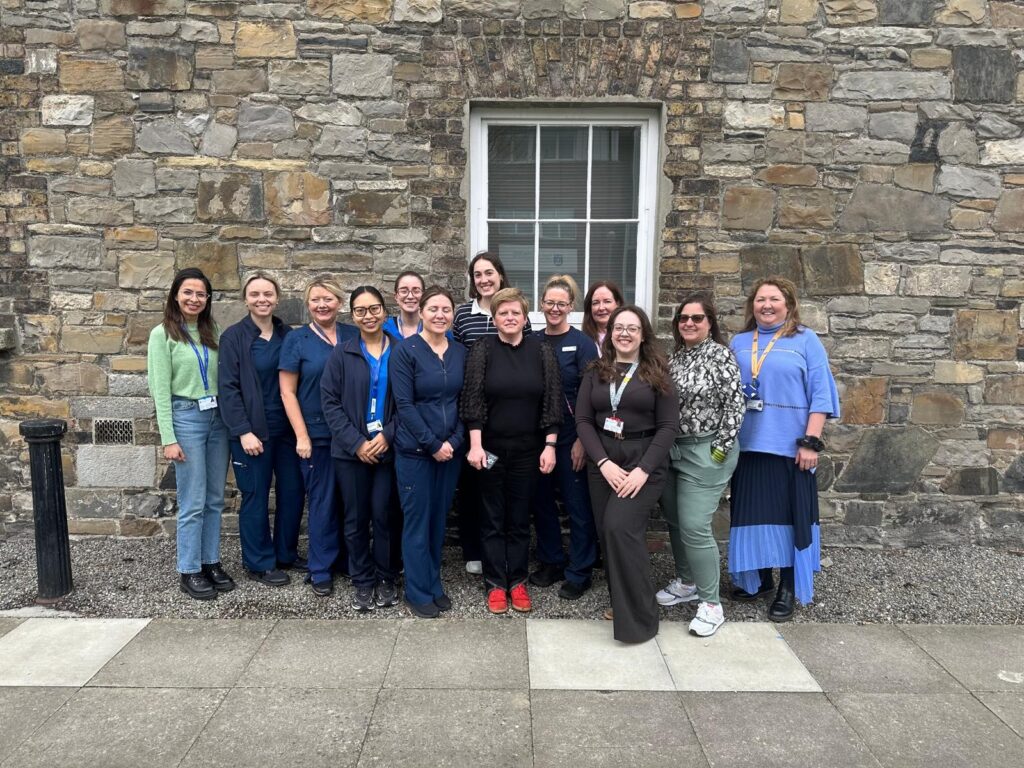
The response to these challenges was multifactorial. We introduced several new roles within the unit, including a dedicated research nurse team leader to oversee the research nursing workforce, a start- up specialist and clinical trial assistant focused exclusively on the trial start-up pathway, and a research assistant role. In parallel, a revised research nursing structure was implemented to strengthen the team and provide a career path for the nursing team. A comprehensive review of the existing trial portfolio was undertaken to identify gaps and opportunities for expansion. This highlighted the need to diversify beyond an exclusive focus on IMP trials. Consequently, we developed stronger links with on-site cancer surgical teams and have since successfully opened and recruited patients to surgical oncology trials. To enhance visibility and accessibility of clinical research, a Clinical Trials page was developed on the hospital website, providing up-to-date information on actively recruiting studies and clear contact details for the public. In addition, an outreach programme was initiated with academic collaborators and pharmaceutical partners to identify new opportunities and support the strategic expansion of the clinical trial portfolio.
Impact
The implementation of these initiatives has had a significant and sustained impact on the unit’s clinical research capability. The introduction of the new roles, together with a revised research nursing structure, strengthened workforce capacity and created clear career progression pathways. This enabled the unit to support a higher volume of studies while maintaining quality, governance, and staff retention.Streamlining the trial start-up pathway resulted in improved efficiency and faster study activation, allowing the unit to respond more effectively to new opportunities and reduce delays to first patient recruitment. The structured portfolio review and subsequent diversification beyond IMP-only trials has led to a sustained increase in trial activity and patient enrolment. Enhancing the visibility of clinical research through a dedicated Clinical Trials webpage improved awareness among patients, clinicians, and referring teams. The outreach programme with academic and industry partners strengthened external relationships, increased the attractiveness of the site for new studies, and supported the strategic and sustainable growth of the trial portfolio.
Critical success factors
The success of this initiative was underpinned by a committed group of Principal Investigators, a skilled and motivated research team, strong collaboration across hospital departments, and sustained support from hospital leadership. Engaged PIs are central to this success. These clinicians play a central role in identifying suitable patients in routine clinical practice, engaging proactively with current and potential sponsors, and continuously seeking innovative treatment options for their patients. The role of the Clinical Trials Unit is to translate this clinical leadership and scientific vision into operational delivery, ensuring that studies are activated efficiently, conducted to the highest standards, and fully integrated into patient care. Diversifying beyond IMP trials proved critical, delivering increased recruitment and providing new learning opportunities that enhanced the skills and capability of the research team.
Next steps
We are focused on sustaining momentum and further expanding activity. Over the medium term, a key priority is the optimal use of technology, including the implementation of an electronic clinical trial patient chart and the development of a fully electronic site file. These initiatives will enhance efficiency, data quality, and regulatory compliance. In parallel, we will continue to diversify the trial portfolio, including the activation of a medical device study, and will maintain proactive outreach to industry partners through our Principal Investigators to support ongoing portfolio growth.