Excellent Practices
Governance Structure
Practice Category: Governance – Structure
Centre: OncoZON Cancer Network

Fabrizia Ketelaars
Network Manager OncoZON
f.ketelaars@mumc.nl
Challenge addressed by the practice
To enable effective collaboration among ten institutions, safeguard shared responsibilities, and sustainably achieve common goals—while respecting the autonomy of the individual organisations—a clear and unambiguous governance structure is essential. This structure should clearly define decision-making authority and accountability at each level, with a scope that not only covers care delivery but also explicitly addresses research and education.
In addition, governance must ensure that a shared vision is translated into concrete and measurable objectives. In a network of multiple autonomous organisations, a clear governance framework helps prevent fragmentation by facilitating joint decision-making and striving for alignment and uniformity where possible and appropriate, for example, in the areas of quality, data, and care pathways, as well as in research and education.
A clear governance structure also enhances transparency, thereby contributing to trust, stability, and continuity within the network. Finally, it supports the timely identification and effective management of risks.
Solution
A suitable solution to the above is the development of a single collaboration agreement for all ten OncoZON institutions. This agreement should be drafted jointly, with medical and business managers as well as legal representatives from all participating institutions, and should explicitly address the topics outlined above. Ultimately, the agreement should be formally approved and signed by all member organisations.
Impact
A single collaboration agreement provides a strong foundation, particularly during the initial phases of network development. It establishes a clear framework for implementing agreements and ensures that roles, responsibilities, and expectations are formally documented. With the agreement signed by all participating institutions, there is transparency and clarity, which enables the network to make concrete and measurable progress.
Critical success factors
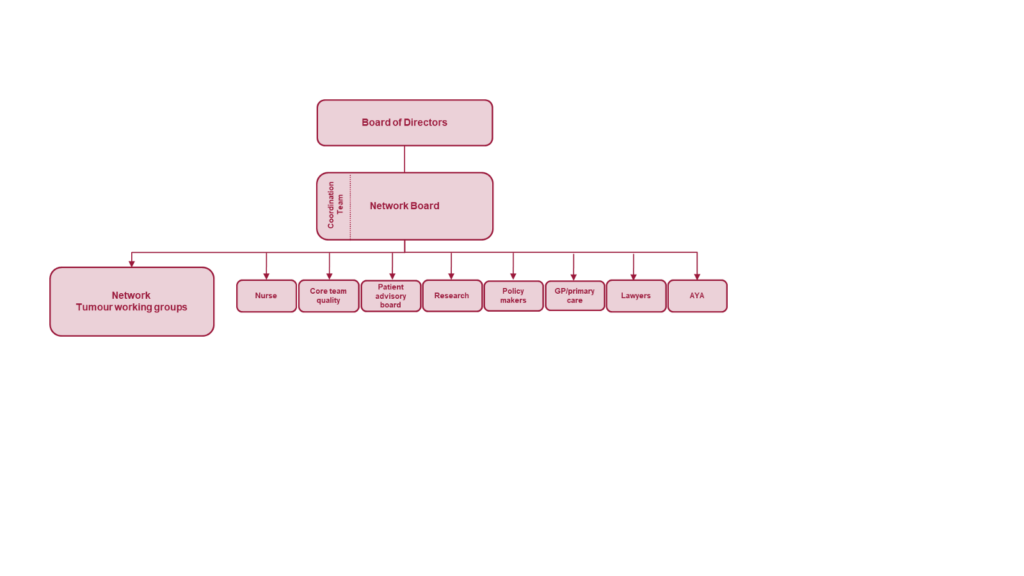
Critical success factors include the shared confidence of all institutions in the objective that formal network formation genuinely adds value, both for the network as a whole and for the individual institutions. There must be a common vision and strategy, as well as commitment from all partners to adhere to the agreed-upon arrangements. In addition, an independent and trustworthy leadership capable of maintaining the confidence of all participating institutions, is of great importance.
Next steps
It is important to review the current collaboration agreement to ensure that all provisions remain relevant and to determine whether any updates are needed. In the Netherlands, a national governance model has been developed, and it is valuable to compare and align the OncoZON governance model with that of the broader Dutch oncology networks.