Excellent Practices
Governance Structure
Practice Category: Governance – Structure
Centre: HSE West North West University of Galway Cancer Centre

Geraldine Cooley
geraldine.cooley@hse.ie

Challenge addressed by the practice
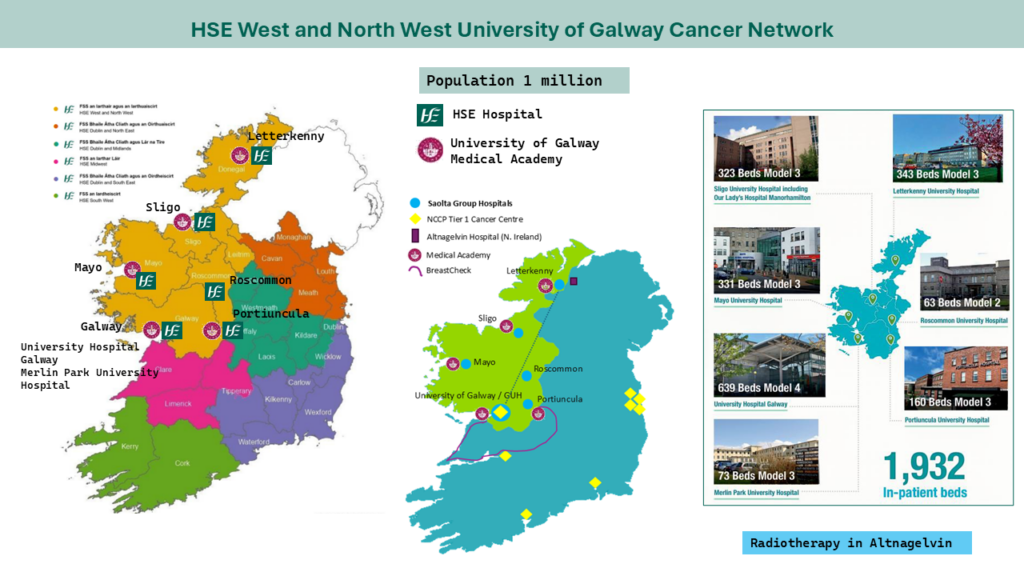
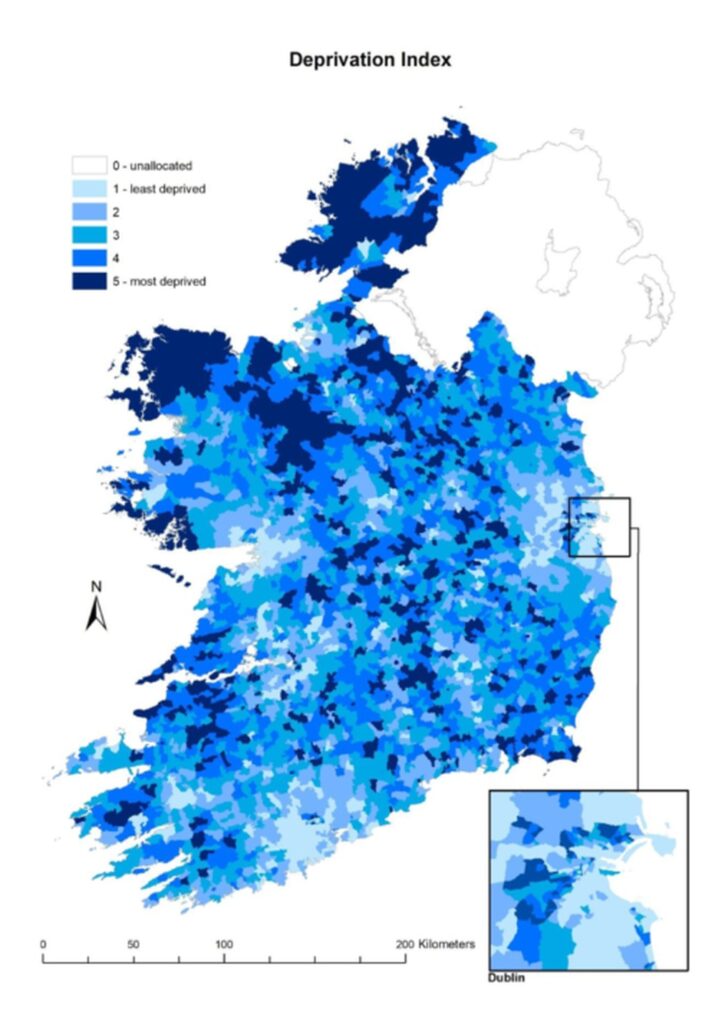
Prior to formal redesign, cancer services in the HSE West and North West region were governed by a governance structure not dedicated to cancer. This posed significant challenges for consistent quality, integrated clinical pathways, research alignment, and performance oversight. Serving a population of over 830,000, the region required cancer services to operate within a coherent clinical, academic, and quality governance framework aligned with the Saolta Group Strategy 2019–2023, the National Cancer Strategy 2017–2026, and the international standards of the OECI Accreditation Programme. The geographically dispersed nature of services necessitated standardisation of care, equitable access to complex and specialised treatments, and the formal integration of research and education into clinical practice. In the absence of an integrated governance mechanism, the ability to monitor performance, disseminate best practice, and systematically drive quality improvement across all sites was limited, challenging progress towards recognised European cancer centre status and strategic alignment.
Solution
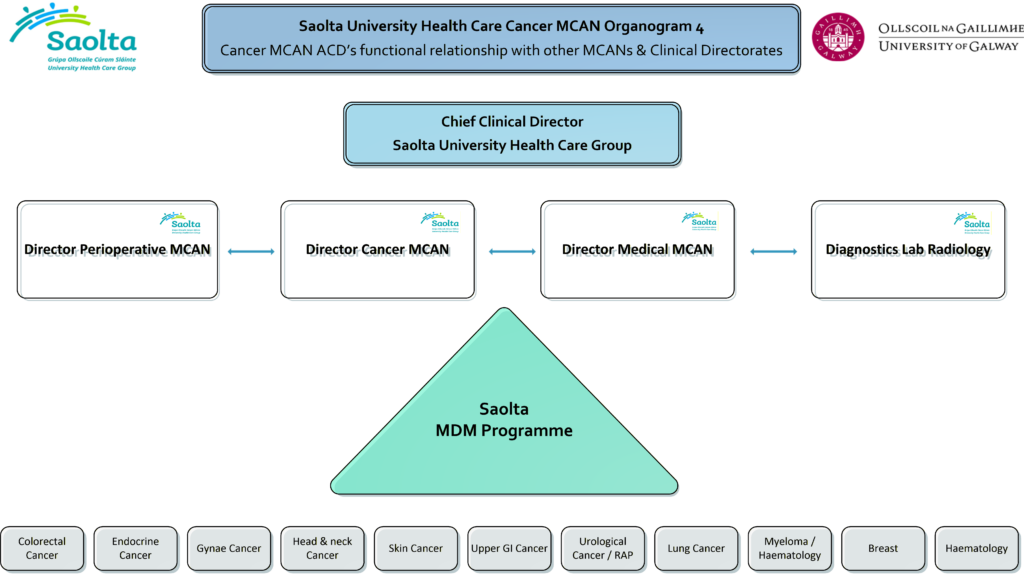
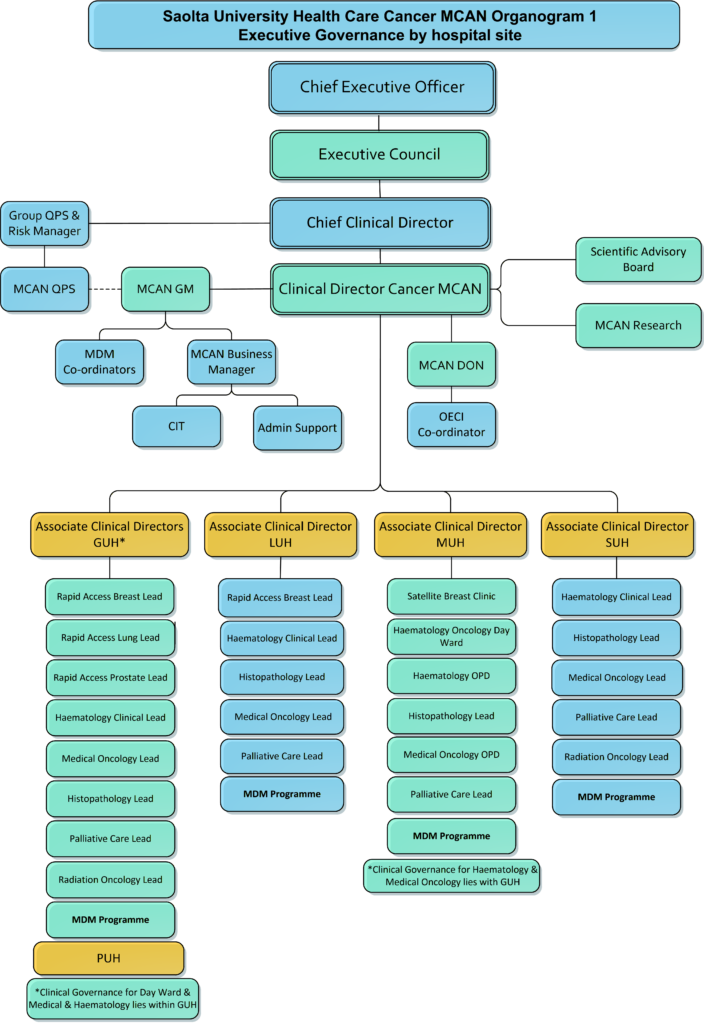
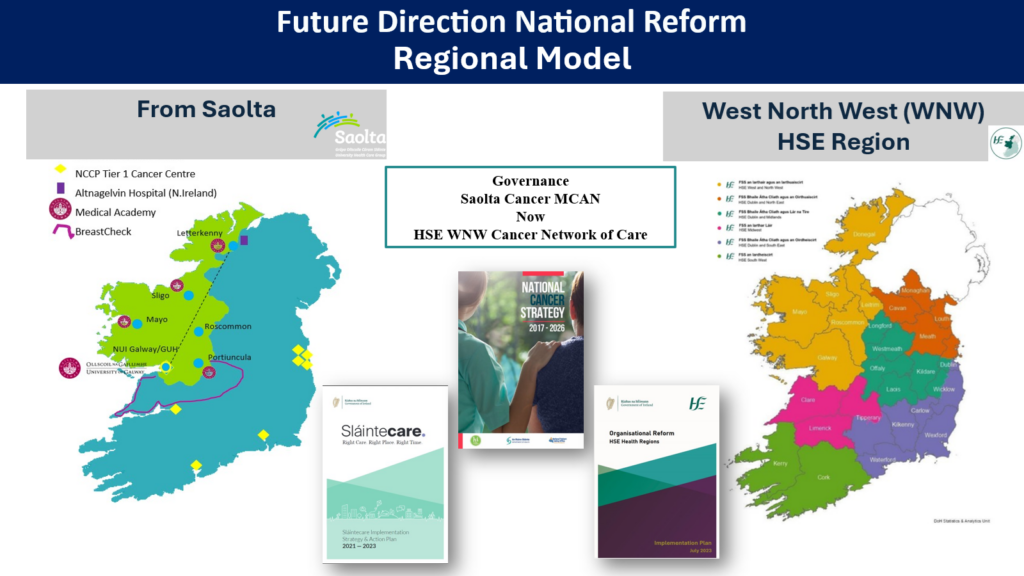
The governance challenge was addressed through the establishment of the Saolta Cancer Managed Clinical and Academic Network (MCAN) in 2020, providing a single, structured governance framework for cancer services across the region. The MCAN is led by a clinically driven Executive Management Team comprising of a Clinical Director, General Manager, and Director of Nursing, with Associate Clinical Directors representing each hospital site. This model integrates clinical leadership with executive accountability and is supported by Quality and Patient Safety, Human Resources, Communications, Finance, and Information Services. The MCAN Executive Team meets monthly to oversee strategy, performance, quality, research, and workforce planning. Cancer services are provided in a hub-and-spoke model of care across the network, with complex cancer care delivered at the cancer centre, while appropriate treatments, including SACT, are provided closer to patients’ homes. The structure enables standardised policies, shared clinical pathways, integrated research and education, and consistent performance monitoring aligned with national and OECI standards.
Impact
The introduction of the Cancer MCAN has delivered demonstrable improvements in the governance, coordination, and quality of cancer services across HSE West and North West, resulting in standardised clinical governance and performance oversight, strengthened patient safety, reduced unwarranted variation, and improved consistency of care across hospital sites. The model has supported equitable access to specialised cancer services through a well-defined hub-and-spoke approach, enabling patients to receive appropriate care closer to home where clinically suitable. Enhanced data collection and KPI monitoring have improved compliance with NCCP performance targets and informed service planning. Importantly, the governance framework underpinned successful engagement with the OECI Accreditation Programme, embedding quality management, multidisciplinary collaboration, and research integration into routine practice. Collectively, these developments have contributed to safer, more coordinated, and patient-centred cancer care across the region.
Critical success factors
Critical success factors included strong clinical leadership embedded within the governance structure, ensuring that service planning and quality improvement were clinically driven and patient focused. Clear lines of accountability between hospital sites, the MCAN Executive, the Saolta Group Executive, and national bodies enabled effective performance management and decision-making. The active involvement of Associate Clinical Directors at site level was essential in translating regional strategy into local implementation. Integration of quality, patient safety, and performance data into regular governance meetings supported timely identification of risk and continuous improvement. The depth of cancer expertise across the network was a key critical success factor, as was staff willingness to engage in quality improvements across the network. Alignment with national cancer policy and international OECI standards provided a clear framework for benchmarking and assurance. Strong collaboration with academic partners ensured research and education were embedded alongside clinical care, reinforcing a culture of evidence-based practice across the network.
Next steps
As part of National Health Service reform by the HSE, the Cancer MCAN is transitioning into the HSE West and North West Cancer Network of Care, reflecting the move to formal regionalisation. This evolution will expand governance to include community-based services such as screening, palliative care, prevention, and survivorship. Strengthened performance and accountability arrangements under the Regional Executive Officer will enhance oversight across quality, access, people, and finance.
Continued alignment with the NCCP, the emerging National Cancer Strategy, and OECI standards will support integrated, high-quality cancer care across acute and community settings. Continued implementation of the recommendations of the Scientific Advisory Board (SAB) will enhance the research ecosystem across the network.