Excellent Practices
Multichannel Patient Involvement
Practice Category: Patient Involvement and Empowerment
Centre: Vall d’Hebron Barcelona Hospital Campus
Claudia Valverde
Comprehensive Cancer Centre Coordinator
cvalverde@vhio.net, claudia.maria@allhebron.cat
Challenge addressed by the practice
We have developed our Patient Pathways (PP) in a multidisciplinary way for nearly all the tumour types treated at the center, but we have not had the opportunity in the past to include a broad patient perspective. We realised that, especially, long-term care was not completely structured or personalised. This year, we decided that we needed to implement a survivorship program, starting from a general guide for cancer survivors.
Solution
Based on our previous experience, we decided to use 3 different and complementary approaches for involving patients:
- VHIOtalks are a series of conferences that bring together patients and leading voices in cancer research, treatment, and survivorship. Designed for patients and the wider community, these sessions offer an interactive space where attendees can learn from and engage directly with experts. Examples include talks on quality of life after cancer and the role of nutrition in cancer prevention and treatment.
- CET Oncology is a stable working group that meets regularly (every 2 months online and 1 face-to-face meeting every year). Participants include hospital staff (doctors from different tumour-type groups and cancer nurses), a primary care representative, representatives of cancer patient associations that have an agreement collaboration with the hospital (8–10 regularly participating), and support staff from the hospital’s citizen participation office (secretariat).
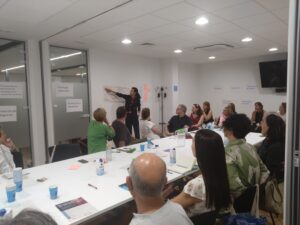
- Patient involvement workshop: this was a 3-hour workshop with professionals and individual patients from our institution. Approximately 30 attendees were divided into small groups of 5–8 to work on different PPs (5 in total, displayed on the wall). They were asked specific questions and could also add comments. At the end, they nominated a representative to share their feedback with the whole group. The same process was followed for the draft structure of the survivorship guide.
Impact
After the face-to-face workshop, we gathered different comments on the PP that needed to be included in the next version of the PP. For example, patients asked to include a structured question about the depth of the information each patient wanted to have on treatment objectives and prognosis at certain time points in the PP (second visit and after progression), to supplement the casual and open question that may arise in a normal visit. They also validated the general structure of the survivorship guide, but added some issues not previously mentioned, like problems with driving license or the need for consultation with specialists we had not thought about, like dentists.
The CET worked on the proposed structure of the guide to complete all the information required, and the patients representatives of the group are working on assuring that the language is understandable, inclusive, and not intrusive for patients.
The growing popularity of VHIOtalks is evidenced by an average attendance of approximately 100 participants per session, demonstrating their success. This impacts directly on the knowledge and the empowerment of the society and the patients in respect to cancer prevention, diagnostic, and treatment. It’s an excellent tool to disseminate our survivorship plan.
Critical success factors
- The existence of other stable working groups (CETs). This structure is present and quite mature in other areas of the hospital. This fact accelerated our learning curve in CET Oncology.
- The fact of having voluntary agreements with patient associations makes it very easy to create this kind of groups.
- Inviting patients from the clinic by their own physician increases the probability that they want to engage in workshops and other activities.
- Seeing the results of previous CET activities (like the New patient guide) also increased their commitment.
- The broad scope of the VHIOtalks is a key element to reach a more general public.
Next steps
After finishing the Survivorship Guide, we want to create a patient version of the patient pathways, as requested by the CET and Workshop components, and to fully develop and test our survivorship program.