Excellent Practices
Multidisciplinarity – Tumour Working Groups
Practice Category: Multidisciplinarity
Centre: OncoZON Cancer Network
Daniëlle Faessen-Holthuijsen or Esmee Volders
GI & Oncological Surgeon and Policy Advisor OncoZON
danielle.holthuijsen@mumc.nl or esmee.volders@mumc.nl
Challenge addressed by the practice
OncoZON aims to provide the best possible cancer care as close to home as possible for patients in the region. Achieving this ambition requires that all organisations within the network are able and willing to deliver the same high-quality, evidence-based care. In practice, however, variation in clinical practice and outcomes between hospitals still existed, which could lead to unwarranted differences in patient care.
Although quality indicators were often monitored at the level of individual hospitals, there was limited systematic use of these indicators at network level. As a result, opportunities to learn from each other, to benchmark performance, and to jointly improve care across the network were not fully utilised.
To truly function as an integrated oncology network, OncoZON needed a structured approach to align care, reduce variation, and collectively take responsibility for the quality of care delivered to all patients within the network.
Solution
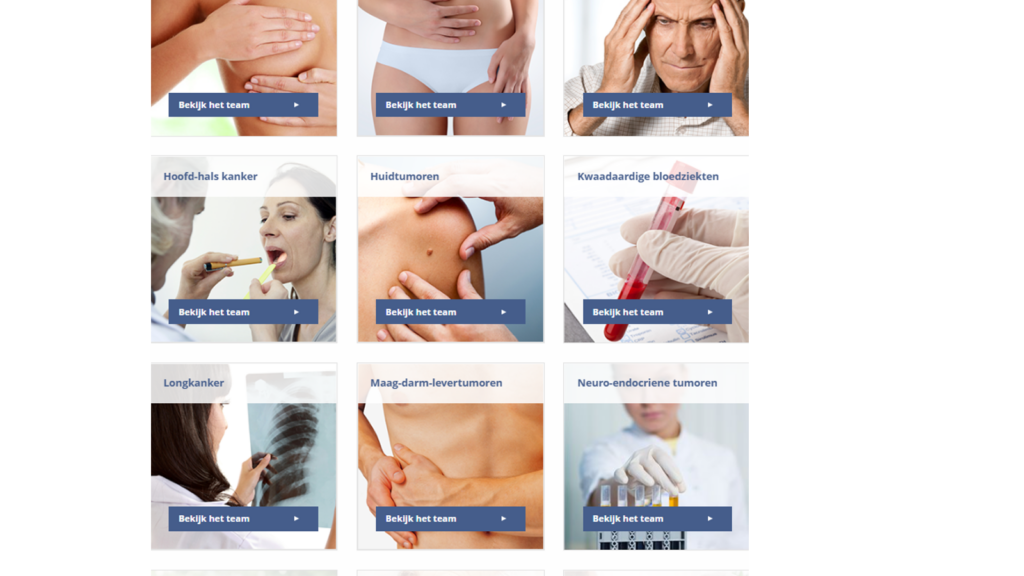
OncoZON established Tumour Working Groups (TWGs) for all tumour types as multidisciplinary, tumour-specific teams at network level to align oncological care across all participating organisations. Each hospital is represented by two to three professionals per TWG, who are responsible for translating network-level agreements into local practice and ensuring feedback to their clinical teams.
Standardised care pathways (newly developed and regularly revised) are a standing agenda item in TWGs. By jointly agreeing on pathways, indicators, best practices, and studies, the TWGs create shared standards and expectations, enabling all organisations in the network to consistently deliver the same high-quality care.
Within the TWGs, quality indicators are systematically reviewed to identify unwarranted variation in care and outcomes. The Netherlands Comprehensive Cancer Organisation (IKNL) supports this process by providing and discussing regional benchmarking reports. Several TWGs have dedicated quality sub-teams led by OncoZON’s quality advisor that analyse these indicators and propose targeted improvement actions.
Impact
Several TWGs now have regional care pathways in place, which are intended to be consistently followed by all hospitals in the network. In addition, some TWGs have established Service Level Agreements with specific hospitals to ensure aligned care for complex or specialised procedures, helping to standardise practice and clarify expectations across institutions.
A concrete example of the TWGs’ impact is the management of sentinel node (SN) procedures in cT1N0 breast cancer patients. Following a network-wide TWG decision to stop this procedure for eligible patients, quality indicators and outcome data showed a clear reduction in SN procedures after the decision date, demonstrating the effect of coordinated guidelines combined with systematic monitoring. Another example is that a unified care pathway in the thyroid cancer group reduced the number of fine-needle aspirations (FNAs) without compromising malignancy detection.
This structured, network-wide approach has positioned OncoZON as a benchmark for other cancer networks across Europe.
Critical success factors
Several key factors underpin the TWG success. The multidisciplinary composition of the groups, including oncologists, surgeons, radiotherapists, nurses, and other professionals, ensures comprehensive discussion, shared decision-making, and agreements across all aspects of patient care.
Regular network meetings create opportunities for professionals to speak openly, learn from each other, and build trust. This trust, combined with the intrinsic motivation and sense of ownership of TWG members, is essential for reducing unwarranted variation and translating network-level agreements into clinical practice. Structured agenda items (covering care pathways, quality indicators, and research studies) combined with agile subgroups (e.g. consensus group lung cancer) ensure continuity, short communication lines, and rapid follow-up.
Clear governance, with all hospitals formally committed to the TWG agreements, provides the framework for alignment and accountability across the network. In addition, policy staff play a crucial role by facilitating meetings, coordinating data, and supporting follow-up, enabling clinical members to focus on content and decision-making.
Next steps
While TWGs have improved collaboration and care alignment, challenges remain. Not all groups function equally well; ensuring consistent attendance, engagement, and a shared sense of responsibility is still a priority. Members must feel accountable for implementing network-level agreements locally.
OncoZON plans to scale quality indicator use to more tumour groups, with dedicated sub-teams monitoring outcomes and driving improvements. Research discussions will also be expanded across all TWGs, ensuring every patient in the region has equal opportunities to participate in clinical studies.
By addressing these challenges, OncoZON aims to provide consistently high-quality, uniform care across the network.