

Excellent Practices
Treatment – Prehabilitation, All Patients Fit4Surgery
Practice Category: Treatment
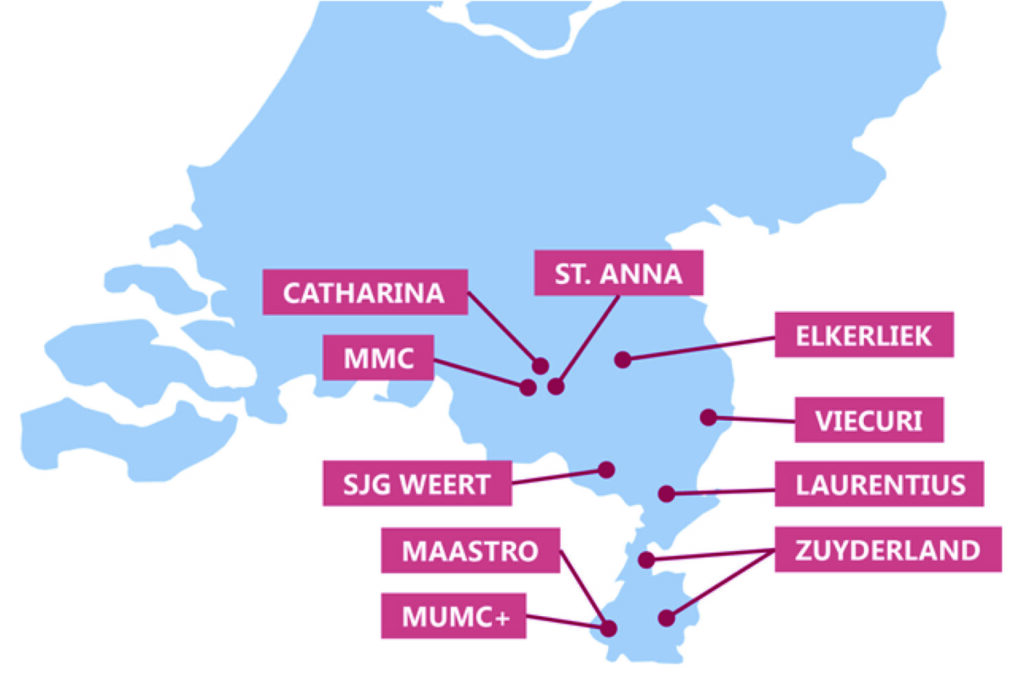
Centre: OncoZON Cancer Network

Daniëlle Faessen-Holthuijsen
Policy Advisor
danielle.holthuijsen@mumc.nl

Challenge addressed by the practice
How can we reduce complications and enhance recovery in major oncological surgery? It is known that physically and mentally fitter patients have better outcomes after surgery. Programs to improve patients’ resilience to the impact of such procedures will potentially lead to less complications, early discharge, a better quality of life, and a reduction of in-hospital costs.
Solution
Prehabilitation is a multimodal programme to improve patients’ condition prior to surgery. The programme consists of 5 pillars and is individualised based on baseline measurements:
- Training, supervised, on strength and endurance
- Nutritional support and supplementation of protein and vitamins
- Mental support and optimal patient education
- Cessation of smoking, if needed, and other lifestyle interventions
- Correction of iron deficiency in anemia
These five pillars work synergistically: protein and vitamins are needed to optimise muscle mass gain in training. A mentally fit patient will be able to train better and, the other way around, exercise will improve cognitive functions and satisfaction. Adequate haemoglobin will support all other pillars.
Máxima Medical Center has played a leading role in the field of prehabilitation in our network and beyond. They have developed a prehabilitation program called Fit4Surgery and have initiated and participated in several prehabilitation studies.

Impact
The impact of prehabilitation is best documented in colorectal cancer surgery, supported by evidence from randomised and real-world studies. These studies show that both fit and less fit patients benefit, with four-week improvements of 20–35% in muscle strength and a 17% increase in cardiorespiratory fitness (steep ramp test). Compared to usual care, prehabilitation is associated with 20–25% fewer postoperative complications and a reduction in hospital stay of 1–2 days. Cost-benefit analyses indicate favourable economic effects.
At Máxima MC (MMC), prehabilitation is embedded as standard of care for both frail and non-frail patients, resulting in participation rates above 90%. Within the OncoZON network, systematic knowledge exchange, among others, through working groups on oncology rehabilitation and gastrointestinal tumours, has supported centres in developing or further strengthening their own prehabilitation initiatives. This has contributed to more consistent availability of prehabilitation across the network, promoting alignment and equity of care.
Critical success factors
Successful implementation of prehabilitation requires optimisation of the entire patient pathway. The diagnostic and work-up phase must be efficient, ensuring sufficient time remains before surgery to offer a meaningful prehabilitation programme. Embedding prehabilitation early in the pathway is therefore essential.
Given the multimodal nature of prehabilitation (exercise, nutrition, psychological support), strong coordination between disciplines is critical. Centres that adopted prehabilitation early provided valuable insights into organisational design, logistics, and role allocation, facilitating implementation in other hospitals.
Though evidence on the effects of prehabilitation is growing, it is still weak due to heterogeneity in the programmes and the fact that randomised studies of such programmes are difficult to execute. Patients are highly motivated to participate and do not want to be randomised, and clinicians are increasingly reluctant to withhold prehabilitation from their patients.
Next steps
Although evidence on the effects of prehabilitation is growing, it is still considered relatively weak, and guideline policy makers are awaiting a higher level of evidence. Further research is needed to determine whether there is a subgroup of patients who may not benefit from prehabilitation, such as very fit patients at baseline. In addition, it remains unclear whether the effects of prehabilitation need to be demonstrated separately for each type of major oncological surgery, or whether prehabilitation can be implemented more broadly across surgical pathways based on existing evidence. Máxima MC is willing to support any clinic in starting up prehabilitation.

Gerrit Slooter